
Log Cabin Patchwork
And a feeling of coming home

During the first Covid lockdown, I made a single log cabin block using cotton patchwork fabric. The centre is red in a traditional block, but aside from that my block is made following a traditional pattern. It starts with a centre square, surrounded by strips of equal width in light colours on one half, dark on the other.
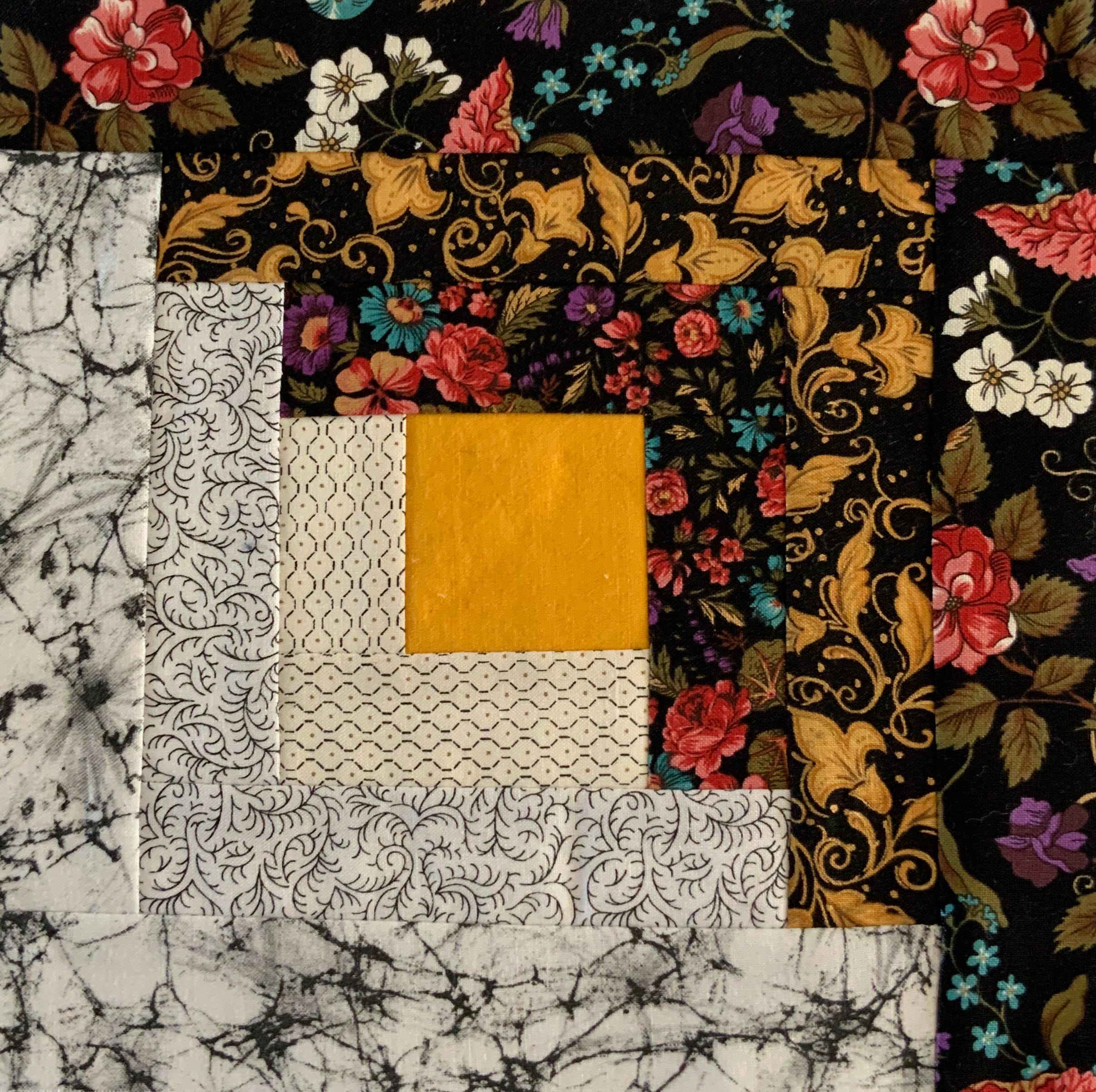
This block would have remained unnoticed in my box of samples if it wasn’t for a set of old, rather worn log cabin blocks in my collection.
I have 12 blocks of log cabin patchwork made to create a ‘sunshine and shadows’ design, although as the smaller sets are offset here, a second design possibly ‘streak o’ lightening’ emerges. Looking at the fabrics these blocks all are clearly from the same quilt, there’s a red fabric, possibly wool, in most of the blocks.
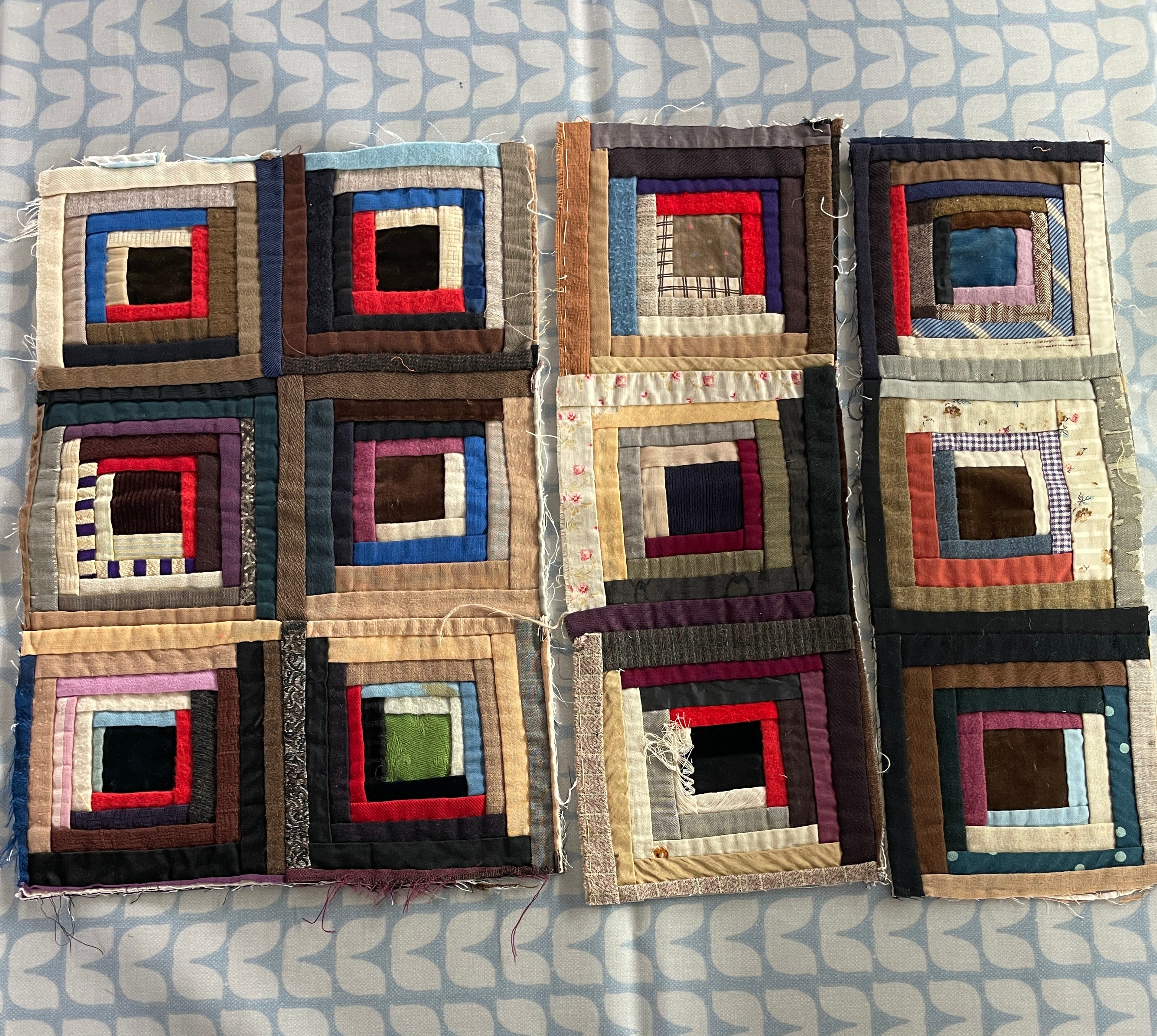
I have no idea about the age of these blocks, or their origin, they do appear to be from a true scrap quilt, made from a variety of materials mostly clothing, or dressmakers offcuts. Like my block these aren’t traditional, the centre squares are all different colours, rather than red. The blocks are hand pieced, they appear to have been initially joined in a conventional manner, then the on the reverse the seams are stitched down. There’s no evidence that these were quilted, so perhaps that’s the reason for the stitched down seams
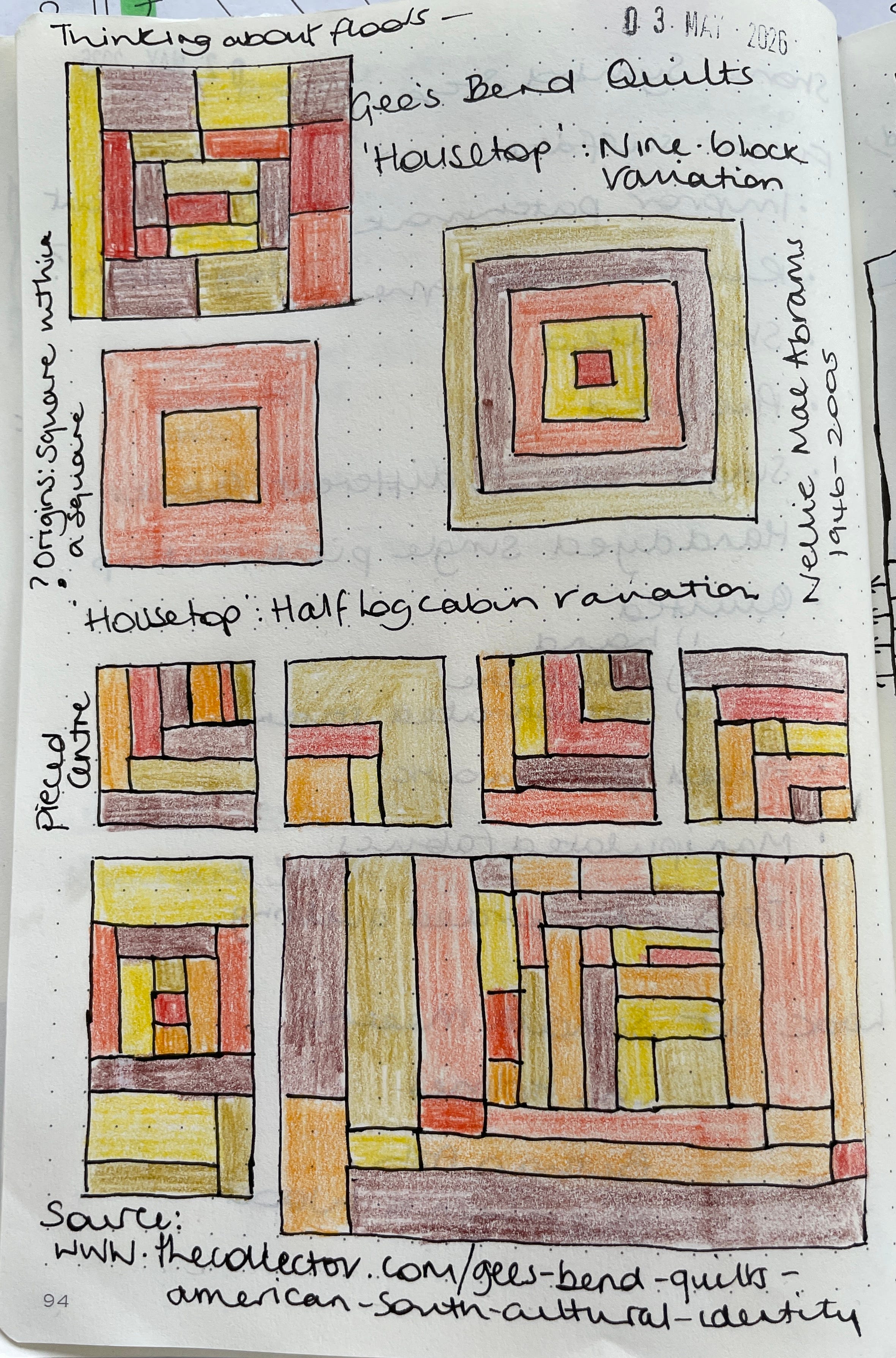
These blocks have been sitting on my work table for about two weeks now, I’ve been observing them as I wander round the room, looking at the fabrics, seeking a clue as to how old they are. Log cabin blocks have started to appear in my journal and my doodles. I’ve explored the works of the quilt artists of Gees Bend . The Gees Bends quilts introduced me to half and quarter log cabin blocks and a quilt design known as “Housetop”. The blocks used in a Housetop quilt are often the partial log cabin blocks which is why they can look similar to the traditional quilts. The beauty of the Gees Bend lies in the way in which the squares and strips are combined, the “wonky edges”, the sense of colour and movement, the irregularity of the cut shapes and the humble materials.
By way of contrast I’ve been studying the Instagram account of Catherine-Marie Longtin, her feed is full of very stylish, inspiring log cabin blocks. I’m sure as I’ve looked at these and other sources I’ve absorbed elements of design which will show up as I begin to draw out my own ideas.
I want to take a walk around a town; look at the pavements, the shops and brickwork in search of log cabins. For now a review of all the photos I’ve taken over the years might prove useful.
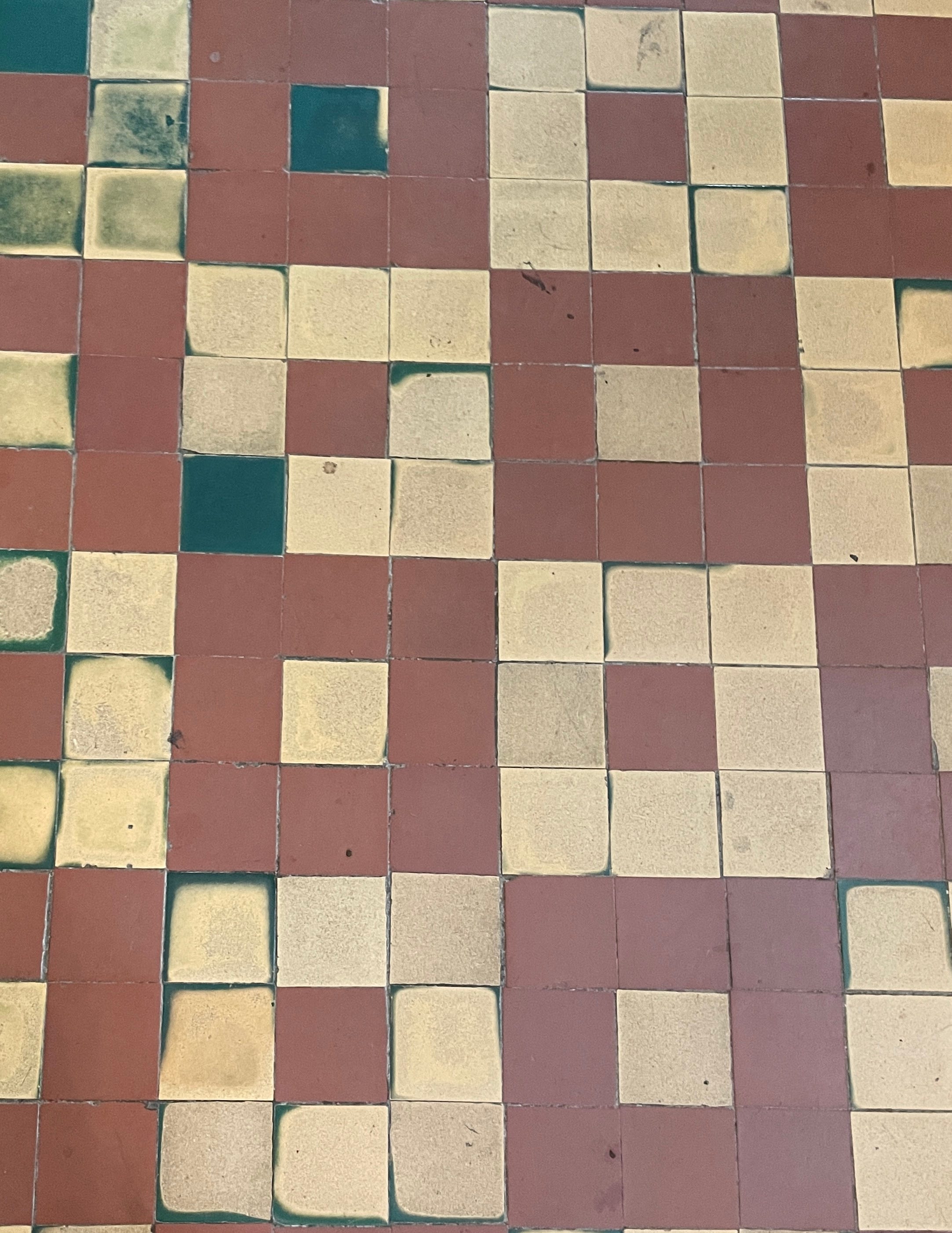
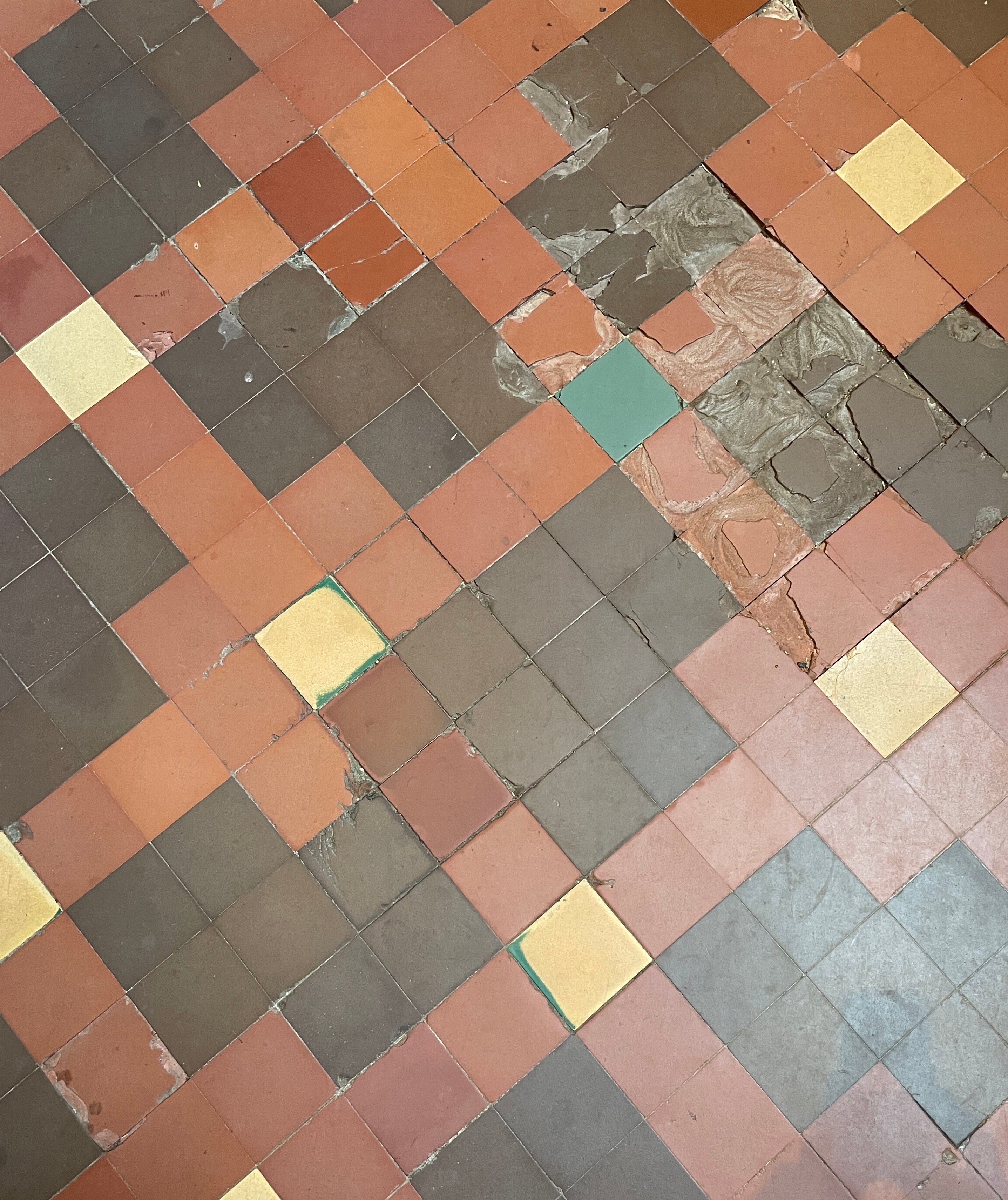
A recent trip to Hereford Cathedral produced some floor tiles which if I redrew some of the lines are close to being log cabin.
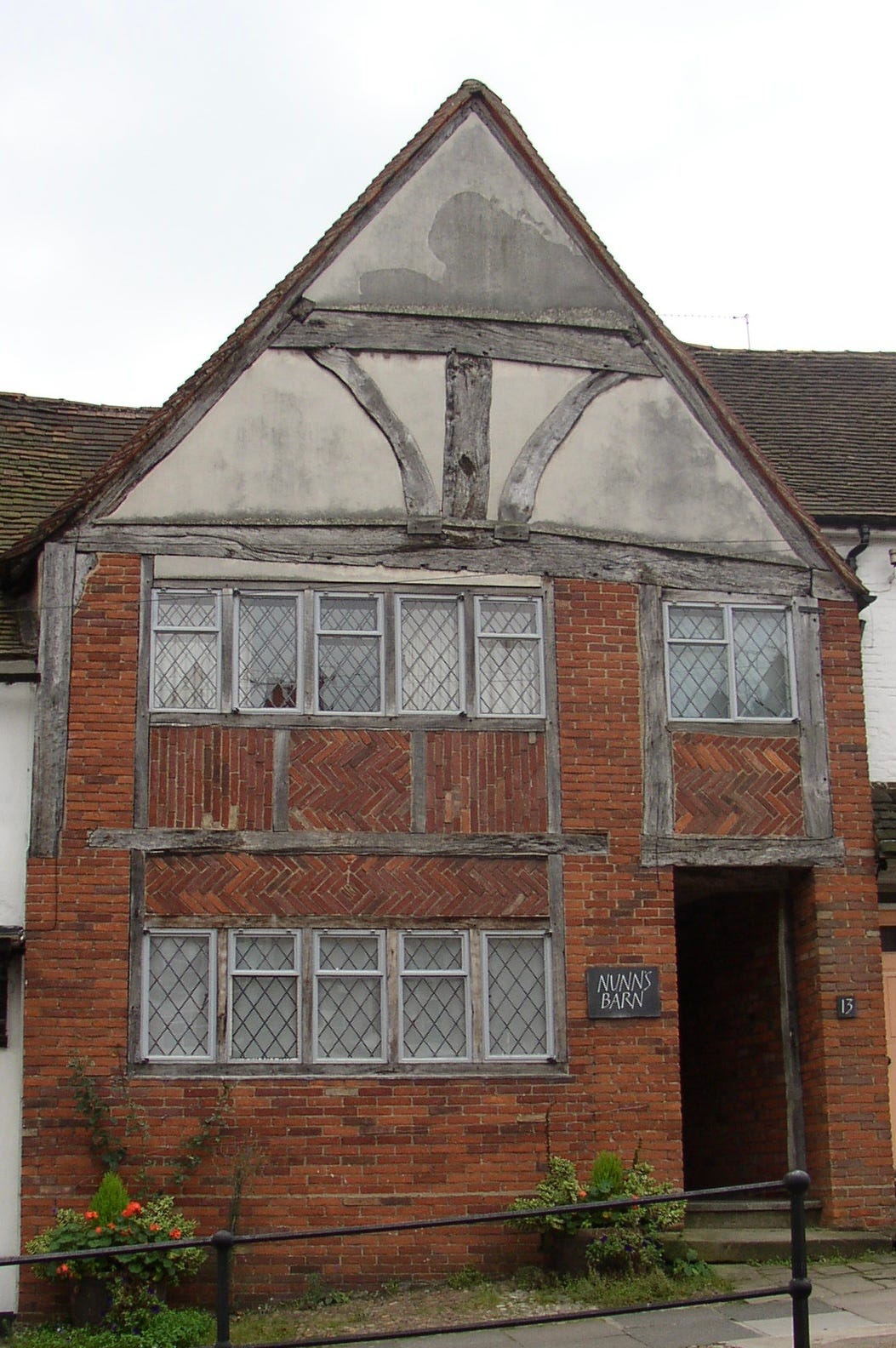
The windows of this barn in Henley on Thames could be simplified to form log cabins, as could some of the decorative brickwork.
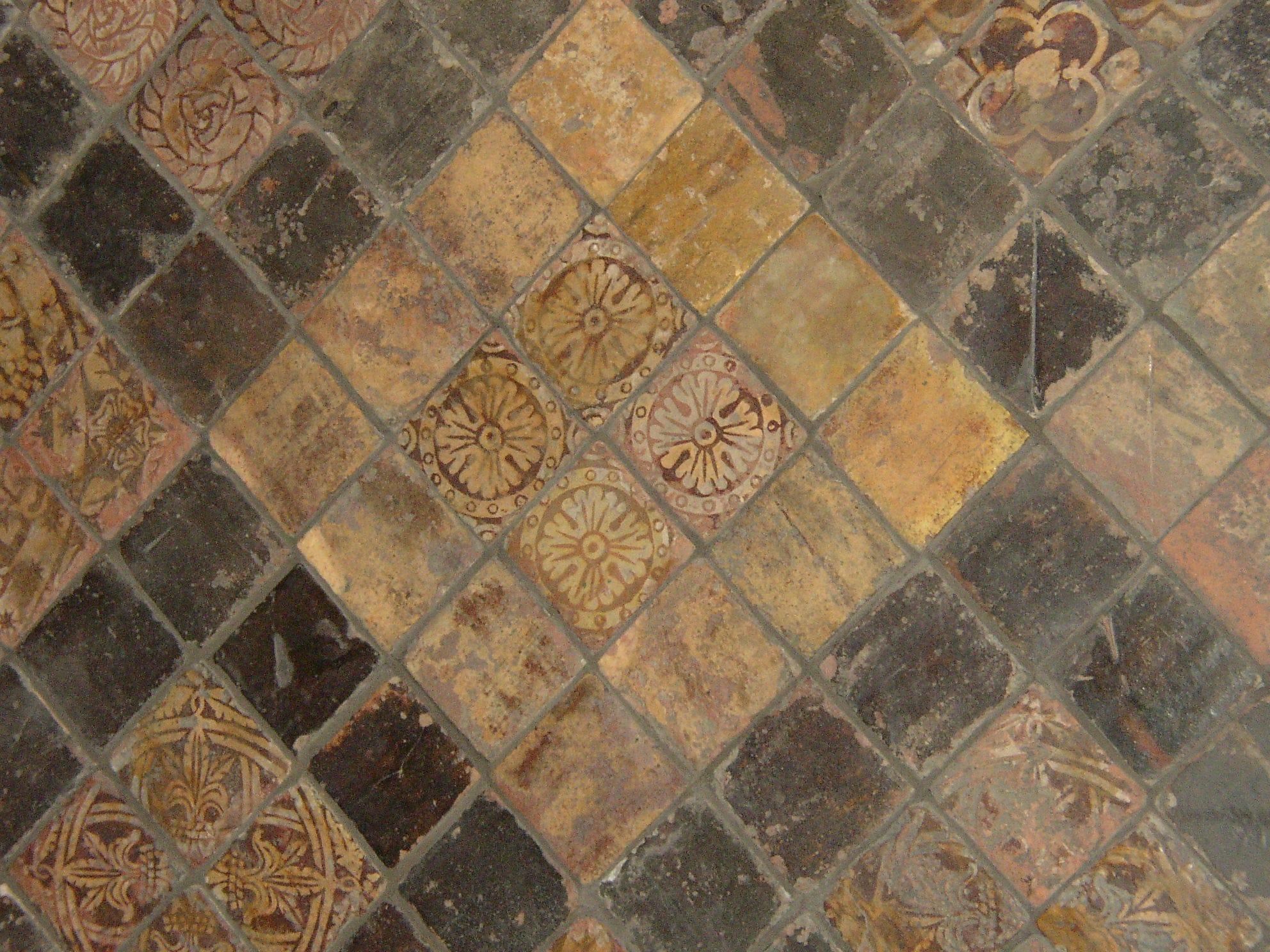
Medieval tiles at the Victoria and Albert Museum, like the tiles in Hereford Cathedral these could be redrawn to form a log cabin.
About the time I made the initial log cabin block in 2020 I came across the work of Paula Kovarik who cuts up her past work to create new quilts and 3 dimensional objects. I’ve been talking for a while about chopping up some English paper piecing that will never see the light of day as a quilt…
… I could chop it into strips for log cabin blocks. I like the idea of making some of the strips in the log cabin from smaller elements, the paper pieced quilt could be the answer. However this approach could lead to me being overly selective about the order in which I add fabric around the central square. If I chop up the aforementioned quilt, put the strips into a bag and pull them at random I’d use them as they came out. Taking this a step further I have lots of embroidered sample like pieces which could be cut smaller to make centre squares, adding unexpected texture to the blocks.
Alongside the log cabin ideas above I’ve finally homed in on the the base for Stone, Symbol, Step, a piece of irregular log cabin in stone colours, with surface texture and some smaller pieced elements to create the textures of the carved stonework. A bit like this fabric which became my travelling sewing kit, only in neutral fabrics. The surface of some of the fabric is composed of scraps stitched in place using feather stitch and an automated machine stitch pattern.
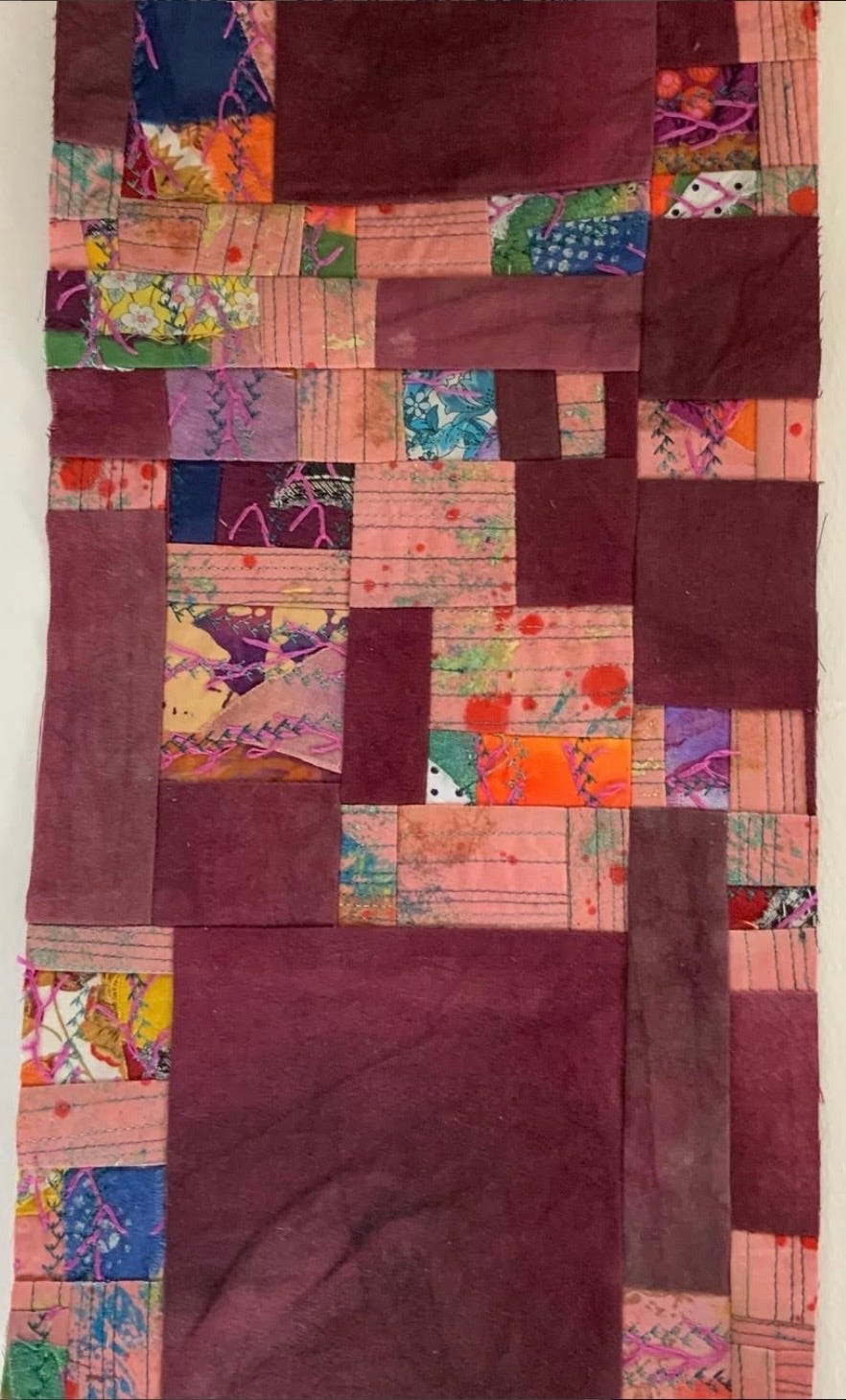
The last few days have been huge, I’m on the brink of something, it feels as though I’m coming home, finally finding the right way to express myself through my textile work.
If you’ve enjoyed this post or experienced a similar breakthrough moment please leave a comment.
Hi Claire, a few years ago I learned log cabin patchwork from a Manx woman. She told me the Isle of Man is where log cabin patchwork originated. It wasn't pieced and quilted, simply stitched onto a backing by hand. No machine stitching, no measuring, no neat stitches because they're hidden not even an iron. That's what your scrap reminds off
...and I've been using some of your scraps today - recognised the black and white on your block 😊